Cod and haddock
Cod and haddock have a mild flavour and firm flakes. They suit the tandoori masala coating, but lean fillets can dry out if you leave them in the heat for too long.
Ever East cooking guide
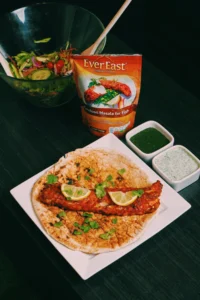
Cook tandoori fish or king prawns with bold, home-style flavour and little preparation. Our Tandoori Masala for Fish Marinade goes straight onto dry fish, so you can skip measuring spices and mixing a wet marinade.
Leave the coated fish to marinate for 45 to 60 minutes, then use your air fryer, frying pan or oven. The marinade suits cod, haddock, salmon, sea bass, tilapia, basa and other white fish fillets.
No egg, yoghurt, oil, or lemon needed.
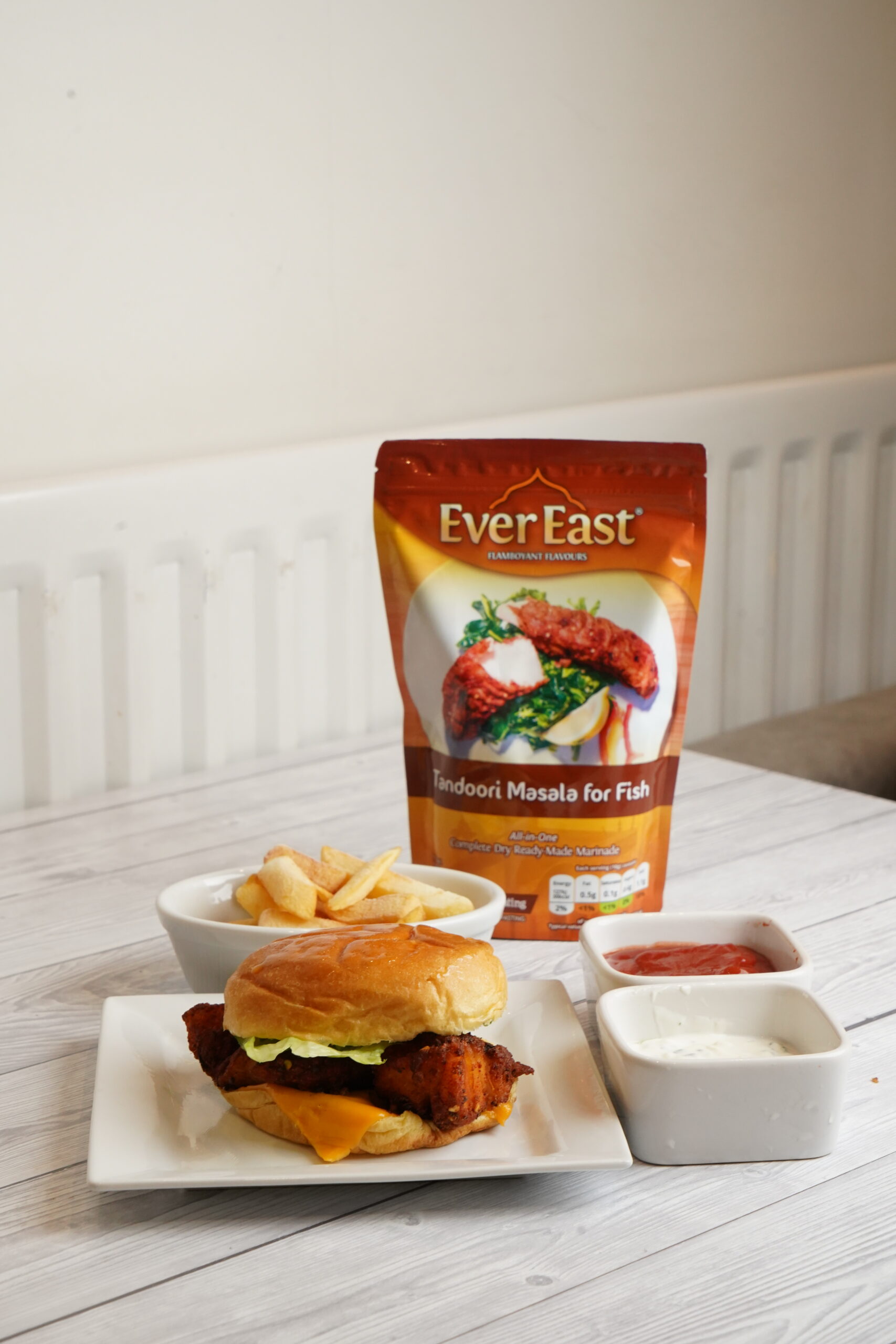
Bold flavour, simple preparation
We make dry marinades for busy home cooks who want big flavour without a long ingredient list. You can apply our fish marinade to a dry fillet or dampen the surface with a little water to help the coating cling.
You do not need to wash or soak the fish. Pat the surface dry, add the marinade and coat all exposed surfaces. If the fish feels too dry for the masala to hold, add a few drops of water with clean fingers.
Leave the coated fish in the fridge for 45 to 60 minutes before cooking. Keep raw seafood away from cooked food and wash your hands, utensils and work surface after preparation.
Choose your seafood
Choose fresh or thawed fish with an even thickness where possible. A fillet with a thick centre and thin tail may cook at different rates, so tuck the narrow end under itself or check it before the thicker section.
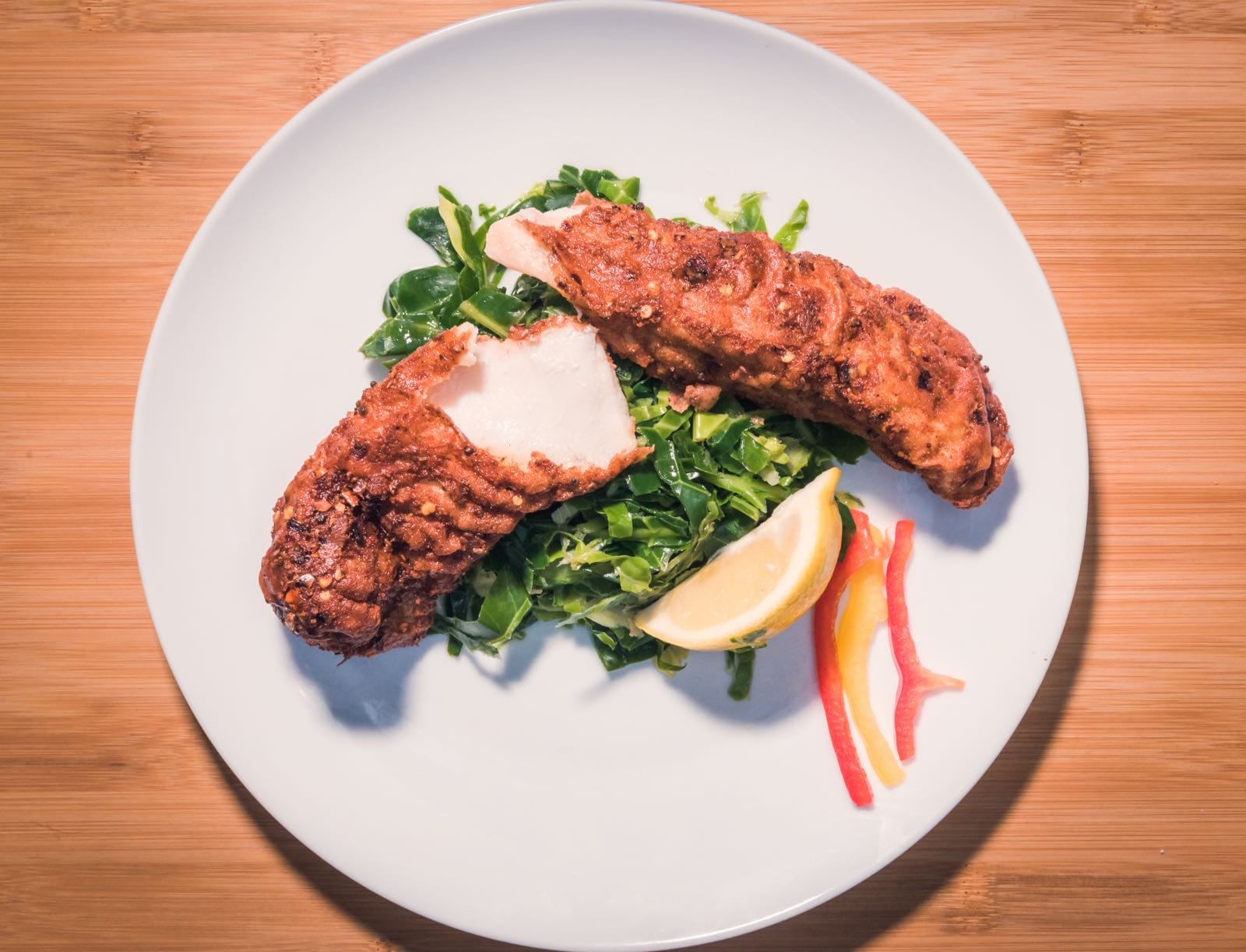
Cod and haddock have a mild flavour and firm flakes. They suit the tandoori masala coating, but lean fillets can dry out if you leave them in the heat for too long.
Salmon has more natural fat than most white fish. Use fillets of a similar size and place the skin side down if the skin remains attached.
Sea bass fillets cook fast because they tend to have a slim profile. Handle them with a fish slice and limit turning to protect the fillet.
Tilapia and basa offer a mild base for the masala. Check slim fillets before thick cod, haddock or salmon portions.
Pollock, coley and other firm white fish can work with the same preparation method. Follow the fish producer’s cooking instructions and adjust for fillet thickness.
Use raw, peeled king prawns with the vein removed. Prawns need less cooking time than fish fillets, so check them from the start and remove them once the flesh turns opaque.
Key timings and methods
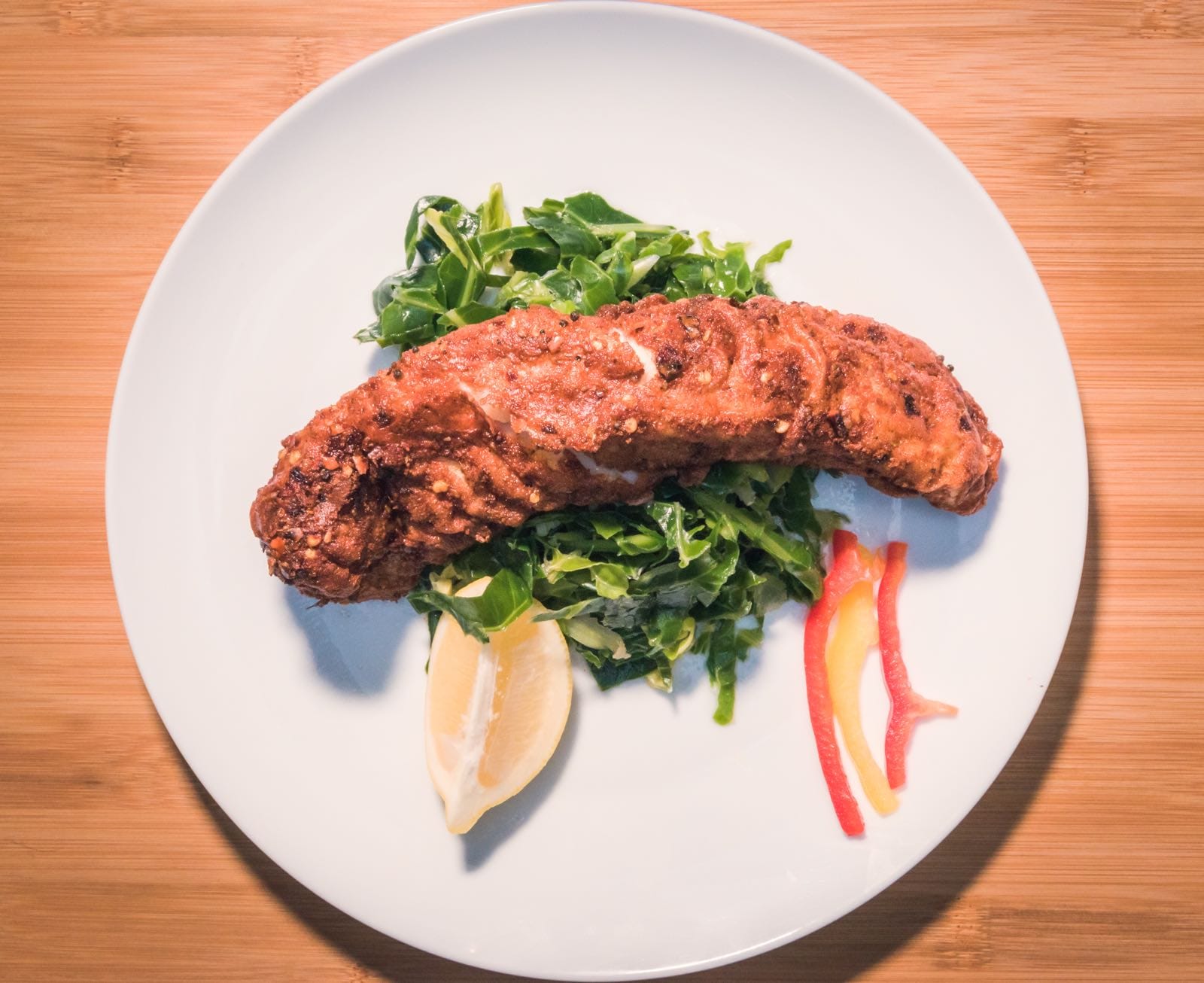
No egg, yoghurt, oil, or lemon needed.
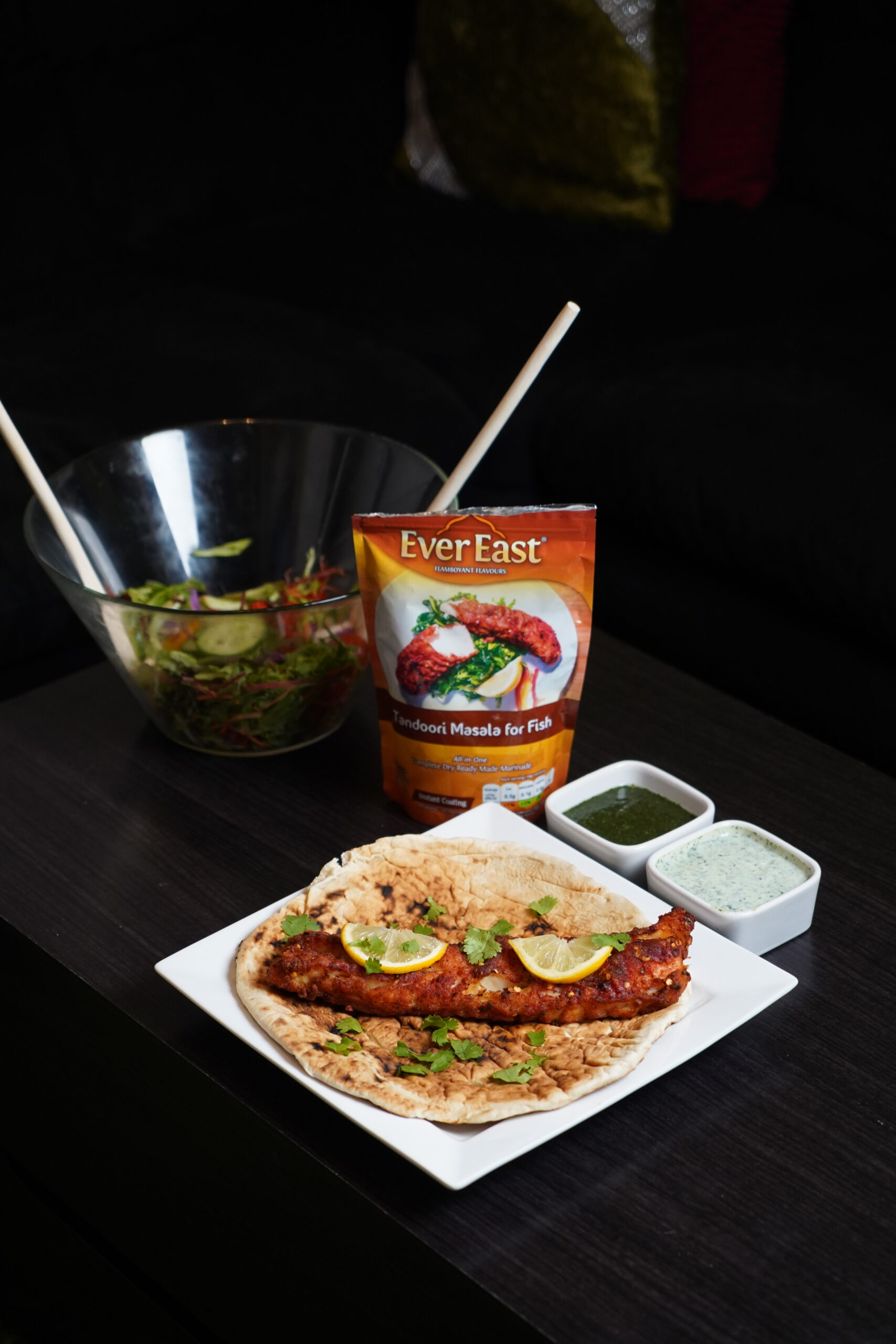
Air-fryer method
Air frying suits firm fillets and king prawns because the moving heat cooks the surface without a pan full of oil.
Air-fryer models move heat at different rates, so one fixed cooking time cannot suit each appliance and fillet size. Check slim pieces before thick portions and avoid extending the cooking time once the centre has cooked through.
Browse our air fryer marinades for more ways to cook bold meals with less preparation.
Stovetop cooking
A non-stick pan gives you control over delicate fish and lets you watch the coating as it cooks.

Use the same method for king prawns, but move them through the pan so each side contacts the hot surface. Remove each prawn once the centre turns opaque.
A thin sea bass, tilapia or basa fillet needs less pan time than a thick piece of cod, haddock or salmon. Heat and thickness affect the result more than fish weight alone.
Family-sized cooking
Oven cooking suits larger portions and family meals because you can arrange several pieces across one tray.
For more help choosing between appliances, read our guide to oven air fryer or BBQ marinated meat.
Protect the coating and texture

Use perforated parchment only if your air-fryer maker permits it. Food must weigh the parchment down so the fan cannot lift it towards the heating element. Keep holes open to maintain airflow.
A clean non-stick pan or lined oven tray also helps protect the coating.
Crowding traps steam and prevents the hot air from reaching the fish. Cook in batches if your basket cannot hold each piece in one layer.
Firm fish may tolerate one turn. Sea bass, basa and other delicate fillets can split if you handle them before the surface sets. Cook skin-on fish with the skin side down and lift it with a broad fish slice.
Check thin tails, slim fillets and king prawns before thick portions. Tuck a narrow tail under the fillet if you want a more even shape.
Cod, haddock and other lean white fish lose moisture if you keep cooking after the centre turns opaque. Check the thickest point and remove the fish once it has cooked through.
Easy meal pairings
For a fast family dinner, add rice and frozen vegetables while the fish marinates. You can find more ideas in our guide to quick delicious weeknight meals.
Safe preparation and storage
You can coat the raw fish in advance and keep it in a covered container in the fridge during the 45 to 60-minute marinating period. Check the seafood use-by date and follow the fish producer’s storage instructions.
Keep raw seafood away from ready-to-eat food. Use separate utensils and plates for raw and cooked fish.
After your meal, transfer leftovers to a clean, covered container and refrigerate them without delay. Follow current Food Standards Agency guidance for chilling and reheating seafood. Heat leftovers until steaming hot through the centre, and do not reheat them more than once.

Practical cooking answers

Yes. Coat salmon fillets with our Tandoori Masala for Fish Marinade and leave them in the fridge for 45 to 60 minutes. Air fry at no more than 160°C, pan fry over controlled heat or follow the salmon producer’s oven instructions.
Yes. Raw king prawns take the coating well and cook faster than thick fish fillets. Remove the shell if you prefer, take out the vein and pat the prawns dry before coating them.
No egg, yoghurt, oil, or lemon needed. Apply the dry marinade to the seafood and press the coating onto the surface.
Yes. Pat the fish dry and add the marinade without another ingredient. The masala can go straight onto the surface.
Water remains optional. Dampen the fish with a small amount of water if you want to help the coating cling. Do not soak it, as excess water can loosen the coating and add steam during cooking.
Yes. Use a non-stick frying pan over medium heat or follow the fish producer’s oven instructions. Keep handling to a minimum if you cook sea bass, basa or another delicate fillet.
Keep the air fryer at 160°C or below. Higher heat may darken the masala before a thick fillet cooks through.
Check the thickest part. White fish should look opaque and separate into flakes under a fork. King prawns should have opaque flesh through the centre. Follow the seafood producer’s safety instructions if they differ.
You can coat it and refrigerate it for the 45 to 60-minute marinating period. Keep it covered and within the seafood use-by date. Do not leave raw fish at room temperature.
Thaw the fish according to the producer’s instructions before adding the marinade. Pat away excess moisture after thawing so the coating can hold.
Big home-cooked flavour, less preparation
Bring home-style tandoori flavour to cod, haddock, salmon, sea bass, tilapia, basa, white fish fillets and king prawns. Apply our dry marinade to the seafood, leave it in the fridge for 45 to 60 minutes and choose your preferred cooking method.
No egg, yoghurt, oil, or lemon needed.

